Dental Crowns vs. Inlays & Onlays in Jefferson City: Which Repair Fits Your Tooth?
July 16, 2026 9:00 amA large cavity or broken filling does not always lead to a dental crown. Some teeth can be repaired with an inlay or onlay, which replaces the damaged area without covering the entire visible tooth. The right choice depends on where the damage sits, how far it extends, and whether the remaining tooth can handle normal chewing pressure.
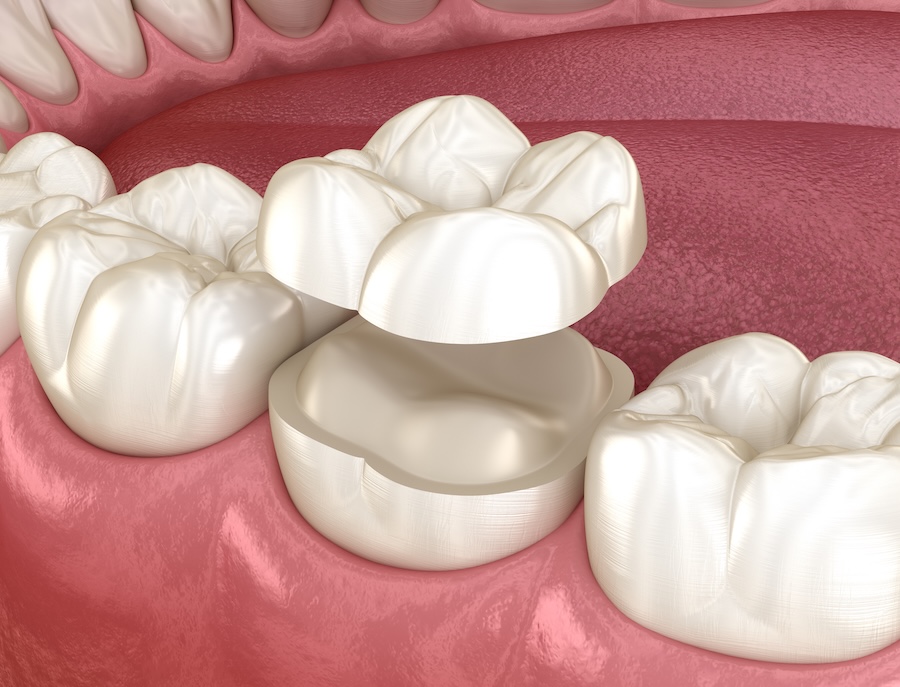
An inlay fits inside the raised edges, or cusps, of a back tooth. An onlay covers a larger area and protects one or more weakened cusps. A crown surrounds nearly all of the tooth above the gumline.
At Southwest Dental Care in Jefferson City, MO, Dr. Thomas Orme examines the remaining enamel, existing fillings, cracks, bite forces, and condition of the tooth’s nerve before recommending a repair. The aim is to keep as much healthy tooth as possible without leaving a weak area exposed.
What Is a Dental Inlay?
A dental inlay repairs damage within the center of a molar or premolar. It fits between the cusps rather than covering them. The restoration is made outside the mouth from a scan or impression and then bonded into the prepared area.
An inlay may be considered when a cavity or old filling is too large for a predictable direct filling, but the surrounding cusps remain strong. It restores the grooves and chewing surface while leaving more of the outside tooth untouched.
Unlike a regular filling, which is shaped directly inside the tooth, an inlay is fabricated as one solid piece. Ceramic is a common choice because it can be matched to the tooth and bonded securely. Other materials may be used depending on the tooth and the amount of pressure it handles.
What Is a Dental Onlay?
An onlay covers the center of the tooth and at least one cusp. It may extend over several cusps when they are thin, cracked, or weakened by a large cavity. Because it covers only the areas that need reinforcement, it is sometimes called a partial crown.
A molar with a wide filling may have very little natural tooth left between the filling and the outside edge. That thin section can flex during chewing and eventually break. An onlay replaces the damaged center and wraps over the vulnerable cusp before the fracture spreads.
The preparation follows the shape of the damage. Healthy walls and cusps may remain uncovered when they are thick enough to support the bite. The finished onlay is then bonded to the tooth.
What Is a Dental Crown?
A crown covers nearly all of the visible portion of a tooth. Dr. Orme removes damaged or weakened material and shapes the remaining tooth so the restoration can fit over it. The crown restores the tooth’s size, contours, contact with neighboring teeth, and chewing surface.
Crowns are often used when damage involves several sides of the tooth or leaves multiple cusps unsupported. They may also be recommended after a major fracture, a very large filling, or root canal therapy when the tooth needs broader coverage.
A crown requires more preparation than an inlay or onlay because it surrounds the tooth. That extra coverage can be helpful when too little strong structure remains for a smaller repair.
How Much of the Tooth Is Damaged?
A cavity contained within the center of the tooth may be suitable for an inlay if the cusps remain thick and intact. Once the damage reaches beneath a cusp or leaves it thin, an onlay may provide needed coverage. A crown becomes more likely when several cusps and outer walls have been weakened.
The amount of visible decay does not always show the full problem. Decay can spread underneath an old filling, and small cracks can continue into areas that are difficult to see on an X-ray. Dr. Orme may get a clearer view after the old restoration and softened tooth structure are removed.
The recommendation is based on what remains after the tooth is cleaned. A molar that looks mostly intact at first may have much less support once hidden decay is removed.
The Cusps Need to Handle Chewing Pressure
The cusps are the raised points on the chewing surface of a back tooth. Each time you bite, they guide food and meet the opposing teeth. A healthy cusp can handle that pressure, but one hollowed out by decay or separated by a large filling may fracture.
An inlay does not cover the cusps, so those areas need to be strong enough to remain exposed. If one cusp is questionable, an onlay can cover it while preserving the stronger portions of the tooth.
When several cusps are cracked, thin, or missing, a crown may spread pressure more evenly. Choosing a smaller repair would not help if an uncovered cusp is likely to break soon afterward.
A Large Filling Can Weaken the Remaining Tooth
A filling replaces lost structure, but it does not always strengthen the tooth around it. As a filling becomes wider, the natural cusps on either side become thinner. They may flex slightly each time the person chews.
Repeated flexing can lead to a crack or broken cusp. A patient may notice a sharp pain when biting on one part of the tooth, or a piece may break without much warning. An onlay can cover the weakened cusp before the fracture travels farther.
A crown may be recommended when the old filling occupies most of the tooth or when several walls have already cracked. Dr. Orme will also check for decay beneath the restoration and gaps around its edges.
Some Cracks Can Be Protected With an Onlay
A small crack limited to one cusp may be manageable with an onlay. Covering the cusp can reduce the bending that occurs during chewing. The bonded restoration helps hold that section together.
Pain when releasing a bite can suggest that part of the tooth is flexing. Cold sensitivity may also appear when the crack reaches deeper layers. Those symptoms are worth checking before a larger piece breaks.
A crack that travels across much of the tooth may require a crown for broader protection. If it extends into the root or splits the tooth into separate sections, neither an onlay nor a crown may provide a dependable repair.
When a Crown Provides Better Protection
A crown may be the stronger choice when the tooth has lost several walls, multiple cusps are weak, or a fracture crosses a large portion of the chewing surface. Covering the tooth allows the restoration to hold the remaining structure together and spread pressure across a wider area.
A crown may also make more sense when an old restoration has already been replaced several times. Each replacement can require removing more weakened or decayed material. Eventually, too little sound tooth may remain for another filling, inlay, or limited onlay.
Teeth with heavy wear may need broader coverage as well. Grinding and clenching place repeated force on the cusps and restoration edges. The repair has to account for those forces, not just the size of the cavity.
When an Inlay or Onlay Preserves More Natural Tooth
Inlays and onlays are shaped around the damaged section, so healthy areas may remain untouched. This can be useful when the tooth has a large central defect but strong enamel and cusps elsewhere.
Keeping more natural structure gives the tooth more of its original foundation. It may also leave more options available if the tooth ever needs another repair. An onlay-treated tooth may still be eligible for a crown later if its condition changes.
That benefit only applies when the uncovered structure is truly strong. Leaving a thin or cracked cusp exposed may lead to a fracture that requires more treatment. Dr. Orme will compare the value of preserving that cusp with the chance that it fails under pressure.
Why a Regular Filling May Not Be Enough
Small and moderate cavities are often treated successfully with direct fillings. Larger defects become harder to restore because the filling has to replace more of the chewing surface. The surrounding tooth may also be too thin to support it.
Composite filling material is placed and shaped directly in the mouth. In a very large preparation, controlling the contact, bite, and stress across the restoration can be more difficult. An inlay or onlay is made as one solid piece and then bonded into place.
A filling may still be reasonable in some larger areas. However, once a cusp is weak or a broad section of the tooth has been lost, an indirect restoration may provide better support.
How Root Canal Treatment Affects the Choice
A tooth that has undergone root canal therapy may already have lost considerable structure from decay, previous fillings, or fracture. The treatment also requires an opening through the chewing surface so the canals can be reached.
Back teeth often need cusp coverage afterward because they absorb substantial biting force. An onlay may be possible when enough strong structure remains. A crown may be recommended when the tooth has extensive damage or several weakened cusps.
Not every root canal-treated tooth needs the same restoration. A front tooth with a small access opening has different needs from a molar with a large old filling. Dr. Orme will base the repair on the amount and location of the remaining tooth.
The Bite Can Change the Recommendation
Two teeth with similar cavities may need different restorations because they carry different loads. One may sit directly under a strong opposing cusp, while another receives much less contact. Grinding and clenching can increase those forces even more.
A person who has worn down several teeth or repeatedly broken fillings may need more coverage. An onlay can protect selected cusps, while a crown may be more appropriate when pressure reaches most of the tooth.
Dr. Orme will check the bite before treatment and again after the restoration is placed. A high contact point can make the tooth sore and place extra stress on the new repair.
What Treatment Usually Involves
The tooth is numbed before the damaged filling, decay, or fractured material is removed. Dr. Orme then prepares only the area needed for the planned restoration. An inlay stays between the cusps, an onlay extends over selected cusps, and a crown requires preparation around the tooth.
A scan or impression records the tooth and the surrounding bite. Depending on how the restoration is made, a temporary may protect the tooth until the final piece is ready. The finished restoration is checked for fit, color, contact, and bite before it is bonded or cemented into place.
Ceramic is commonly used because it can resemble natural enamel and handle chewing pressure well. Zirconia, metal, and other materials may also be appropriate depending on the location of the tooth, the strength required, and how visible the restoration will be.
How Long Can These Restorations Last?
Crowns, inlays, and onlays can all last for many years. A systematic review comparing them found five-year survival rates above 90 percent for both complete crowns and inlays or onlays.
The lifespan depends on the condition of the remaining tooth, the quality of the bond or cement, bite forces, hygiene, and diet. A nightguard may be recommended when grinding places the restoration at greater risk.
New decay can still form where the restoration meets the tooth. Brushing with fluoride toothpaste, cleaning between the teeth, and keeping regular dental visits help protect that margin.
Cost and Insurance
Dental plans may cover crowns, inlays, and onlays differently. Some plans place them in the same category, while others reduce the benefit to the cost of a filling or apply replacement limits.
The Southwest Dental Care team can review the estimate and explain what the plan is expected to cover. Dr. Orme’s recommendation, though, will be based on what the tooth needs to hold up over time.
When comparing options, it helps to ask which parts of the tooth are still strong and which areas need coverage. That explanation usually makes the difference between an inlay, onlay, and crown much easier to understand.
Dental Crowns, Inlays, and Onlays at Southwest Dental Care in Jefferson City
An inlay may fit damage contained between healthy cusps. An onlay can repair the center of a tooth while covering one or more weakened cusps. A crown may provide better support when damage affects most of the tooth or leaves several walls at risk of fracture.
At Southwest Dental Care in Jefferson City, MO, Dr. Thomas Orme can examine a large filling, cracked cusp, broken tooth, or area of deep decay. He will explain how much healthy tooth remains and why one repair may fit better than the others.
Schedule an appointment with Southwest Dental Care when a filling breaks, a tooth hurts while chewing, or part of a molar feels sharp or uneven. Treating a weakened area before another section breaks may allow more of the natural tooth to remain.
Categorised in: Dental Crowns