Oral Cancer Screening at the Dentist: What We Check During Your Exam
August 18, 2026 9:00 amAn oral cancer screening is one of those parts of a dental visit that can happen pretty quietly. While you may be thinking about your cleaning, a sensitive tooth, or whether that older filling is still holding up, your hygienist and Dr. Thomas Orme are also looking at the soft tissues throughout your mouth. Most of the time, the screening only takes a few minutes, but it gives us a chance to notice changes that may be hard for you to see at home.
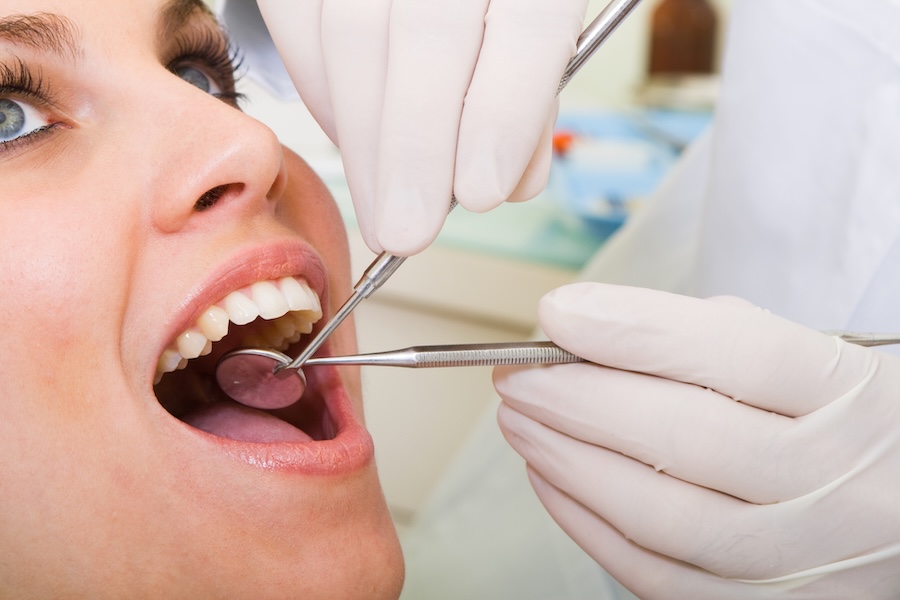
At Southwest Dental Care in Jefferson City, MO, your hygienist may perform part or all of the oral cancer screening, Dr. Orme may do it, or both may take a look during the same visit. We check the tongue, cheeks, gums, lips, floor of the mouth, roof of the mouth, and nearby areas around the jaw and neck. Then, if we notice a sore, patch, lump, swelling, or another change that looks unusual, we can document it, watch how it changes, and decide whether it needs further evaluation.
What an Oral Cancer Screening Includes
The screening usually starts with a visual exam. Your hygienist or Dr. Orme looks for changes in color, texture, shape, or symmetry throughout the mouth. We are also watching for sores, thickened areas, red or white patches, and tissue that looks different from the area around it.
Then, certain areas may be gently felt inside the mouth and along the jaw or neck. Some changes are easier to feel than they are to see, especially if they sit underneath the surface. So, the exam includes both looking and feeling rather than relying on one or the other.
Because this is often folded into a regular cleaning and exam, you may not even realize every part of the screening is happening. Your hygienist may notice something during the cleaning, and then Dr. Orme may take a second look during the exam. In other visits, everything looks completely normal and the screening passes without much discussion.
The Tongue Gets a Close Look
The tongue is one of the areas we check carefully because changes can appear on the top, sides, or underneath it. Your hygienist or Dr. Orme may ask you to move your tongue or gently hold it aside so the less-visible areas can be seen. Then, we can look for sores, swelling, red or white patches, or changes in the surface.
The sides and underside of the tongue are especially hard to inspect on your own. You may know that one spot feels tender when you eat something salty or spicy, yet still have no idea what is actually there. So, if one area has felt sore, rough, or different for more than a couple of weeks, mention it while you are in the chair.
Sometimes the cause is something simple, such as biting your tongue or rubbing against a sharp edge on a tooth. However, if the area keeps returning or does not seem to heal, Dr. Orme will want to look at it more closely. Knowing how long it has been there and whether it has changed gives us more information than appearance alone.
The Floor and Roof of the Mouth Are Checked Too
The floor of the mouth sits underneath the tongue, and it is not exactly easy to inspect in the bathroom mirror. Your hygienist or Dr. Orme may gently move the tongue aside and look at the tissue underneath. We can also check for swelling, color changes, or an area that feels firmer than the tissue around it.
The roof of the mouth gets checked as well. You may notice soreness there after hot food burns the tissue, but otherwise that area tends to stay out of mind. Because of that, a patch or sore may be present for a while before you happen to notice it yourself.
If you have felt burning, tenderness, or one spot that seems different when your tongue passes over it, point it out. You do not need a perfect description of what feels unusual. Simply showing us where you feel it gives us a place to start.
The Cheeks, Gums, and Lips Are Part of the Exam
The inside of the cheeks and the gums can become irritated from cheek biting, brushing, dentures, braces, or a rough edge on a tooth. At the same time, we are also looking for tissue that appears unusually red, white, thickened, swollen, or ulcerated. So, if you keep getting a sore in the same place, mention it even if it is not especially painful.
The lips are checked inside and out as well. Changes can appear along the inner lining, the border of the lip, or the nearby skin. Because the lower lip gets a fair amount of sun exposure, we also look for a rough, crusted, discolored, or persistent area that does not seem to clear.
If you spend a lot of time outdoors, lip balm with sun protection is a simple habit that can help reduce repeated ultraviolet exposure. Meanwhile, if one spot keeps cracking, bleeding, scabbing over, or returning in the same place, point it out during your visit. Dry lips are common, but one stubborn area deserves a closer look.
We Also Check the Jaw and Neck
Oral cancer screening is not limited to the inside of the mouth. Your hygienist or Dr. Orme may also feel along the jaw, under the chin, and around the sides of the neck. We are checking for swelling, unusual firmness, or lymph nodes that feel enlarged.
Most people do not regularly compare one side of the neck with the other or press around underneath the jaw. However, those areas are easy for us to include while you are already here for a dental visit. So, this part of the exam usually takes only a few moments.
If you have noticed a lump under your jaw or in your neck that has not gone away, let us know before the exam begins. The same goes for swelling or tenderness that does not seem connected to a recent cold or dental infection. Then, we can make sure that exact area gets some extra attention.
Pain Is Not Always a Good Measure
It is easy to assume that a serious problem would hurt, but that is not always the case with changes in the mouth. Some areas that need further evaluation may be completely painless, especially early on. On the other hand, plenty of sore spots turn out to be caused by something much less serious, such as trauma or irritation.
Because of that, we do not judge a spot only by whether it hurts. We also look at how long it has been there, whether it is changing, how the tissue looks, and whether there is a lump, patch, or area of firmness. So, a painless spot that has been hanging around can be just as important to mention as one that is tender.
This is also why routine screenings are helpful. You may not feel anything unusual at all, yet your hygienist or Dr. Orme may notice a small change while examining an area you rarely see yourself. Then, we can keep an eye on it before it has a chance to become easier to notice.
A Sore That Does Not Heal Should Be Checked
Mouth sores are common, and most heal on their own. You can bite your cheek during lunch, burn the roof of your mouth on hot food, or scrape the gums with something crunchy. Usually, those spots start improving within several days.
However, if a sore is still there after about two weeks, it should be checked again. If it is getting larger, bleeding easily, or changing in appearance, bring it up sooner. Dr. Orme can look at the location, shape, color, and surrounding tissue and compare it with what was seen before.
It also helps to remember how the sore started. If you clearly remember biting the area and it has been getting smaller day by day, that gives us some context. On the other hand, if it appeared without an obvious reason and has barely changed, we may want to follow it more closely.
Red or White Patches May Not Hurt
Some tissue changes do not cause any discomfort at all. A red patch, white patch, or mixed red-and-white area may sit quietly inside the mouth without making eating or brushing uncomfortable. Because of that, you may not know it is there unless you happen to see it.
These patches can have several causes, including irritation or infection. Your hygienist or Dr. Orme will look at where the patch is, how large it is, and whether the surface appears smooth, rough, or thickened. Then, depending on what we see, we may photograph it and compare it at a follow-up visit.
If you notice a patch that does not brush or wipe away, mention it. Try not to scrape at it repeatedly because that can make the tissue more irritated. Instead, let us see how the area normally looks.
Oral Cancer Screening Is Not Only for People Who Smoke
Smoking is a major risk factor for oral cancer, but it is not the only one. Certain strains of human papillomavirus, or HPV, are linked to cancers farther back in the mouth and throat, including the tonsil area and base of the tongue. Because of that, oral cancer screening still belongs in a routine dental exam even for patients who have never smoked or used tobacco.
HPV-related cancers can also develop in areas that are difficult to see at home. So, while your hygienist and Dr. Orme check the tissues they can see and feel, they may also ask about symptoms such as a persistent neck lump, trouble swallowing, ongoing throat discomfort, or unexplained ear pain. If something does not fit the usual pattern, Dr. Orme can recommend another evaluation.
Tobacco history is one part of the screening, but it is not the whole story. Alcohol use, HPV, age, sun exposure, and other factors can all affect risk. That is why screening is part of a thorough dental exam rather than something reserved only for people who smoke.
Tobacco and Alcohol Still Increase Risk
Tobacco use does increase the risk of oral cancer. Cigarettes, cigars, pipes, chewing tobacco, and other tobacco products all expose the tissues of the mouth to substances that can cause changes over time. So, when your hygienist or Dr. Orme asks about tobacco use, give the most accurate answer you can.
Heavy alcohol use can increase risk as well, especially when combined with tobacco. If both are part of your history, Dr. Orme may pay closer attention to tissue changes and ask more questions about anything new you have noticed. Meanwhile, regular dental visits give us repeated opportunities to compare how the tissues look over time.
These questions are simply part of the health history, just like medications, surgeries, or previous dental treatment. Accurate information helps us know what to look at more closely during the exam. It also helps us understand whether a change needs to be followed sooner rather than later.
Changes in Swallowing, Speaking, or Sensation Are Worth Mentioning
Not every symptom shows up as something visible in the mouth. Some people notice that swallowing feels different, their voice has changed, or there is a persistent feeling that something is caught in the throat. If one of those symptoms keeps hanging around, mention it during your dental visit.
The same goes for unexplained numbness in the lip or tongue, a change in tongue movement, or persistent ear pain without an obvious ear problem. These symptoms can have many possible causes, so they do not automatically point to oral cancer. However, if they continue without a clear explanation, Dr. Orme may recommend further evaluation.
A dental visit gives you a convenient time to bring those things up while the mouth and nearby tissues are already being checked. Then, if the problem seems to extend beyond what can be evaluated in our office, Dr. Orme can recommend the appropriate provider for the next step.
What Happens If We Find Something Suspicious?
Finding an unusual area does not automatically mean something serious is going on. In many cases, the first step is simply to document what we see with an intraoral photo and give the tissue a little time to heal. Then, we may ask you to come back in about two weeks so Dr. Orme can compare the area with the original photo.
That follow-up can tell us quite a bit. If the spot is clearly smaller, less irritated, or gone altogether, that may point toward trauma or another temporary cause. However, if it has not changed, has become more pronounced, or still does not look typical, Dr. Orme may recommend a biopsy.
A biopsy may be performed by an oral surgeon or another specialist, depending on the location and the type of tissue involved. A small sample is taken and examined under a microscope so there is no guessing about what the area is. Often, that next step ends up providing peace of mind because the tissue turns out to be benign, but when a spot looks suspicious, it is better to check than simply keep wondering.
An Oral Screening Does Not Diagnose Cancer
An oral screening can identify an area that deserves more attention, but appearance alone cannot confirm cancer. Many sores, patches, lumps, and color changes have noncancerous causes. So, if your hygienist or Dr. Orme notices something unusual, that is not the same as receiving a cancer diagnosis.
Instead, the screening helps us decide what should happen next. Sometimes that means taking a photo and rechecking the area after two weeks, while other times a referral makes more sense right away. Then, if a biopsy is recommended, the tissue itself can provide the answer rather than relying on how the spot looks.
That process can feel like a lot for something that may not even hurt. Still, most patients would rather know what a persistent spot is than spend months wondering about it. A clear follow-up plan keeps things moving without jumping to conclusions.
Regular Dental Visits Give Us More Chances to Notice Changes
You see your mouth every day, but most of what you see is the front of the teeth, the gums, and part of the tongue. Areas underneath the tongue, along the inner cheeks, and farther back are much harder to inspect well. During a dental visit, your hygienist and Dr. Orme can see many of those areas from angles you simply do not get at home.
Regular visits also give us something to compare with. If your hygienist has seen the same tissue every six months and suddenly notices a new patch or sore, that change may stand out right away. Then, if we take an intraoral photo, we also have something concrete to compare at the next visit.
You also do not have to wait for your next cleaning if something appears between appointments. A sore that is not healing, a new lump, persistent numbness, or another unusual change can be checked sooner. Just call Southwest Dental Care and tell our team what you have noticed.
What to Mention During Your Dental Visit
If something in your mouth has been bothering you, mention it even if it seems small. Tell your hygienist or Dr. Orme when you first noticed it, whether it has changed, and whether it hurts, bleeds, or interferes with eating or speaking. Those details help us know exactly where to look and what has been happening between visits.
Also, bring up changes that come and go. A sore may disappear before every dental appointment and still be worth discussing if it keeps returning to the same spot. If you happened to take a photo when it was more noticeable, feel free to show us.
You do not need dental terminology to describe what is happening. Saying, “This side of my tongue has felt rough for three weeks,” or “I keep getting a sore under my denture right here,” is plenty. From there, your hygienist or Dr. Orme can take a closer look at the exact area you mean.
Oral Cancer Screening at Southwest Dental Care in Jefferson City, MO
During an oral cancer screening, your hygienist, Dr. Thomas Orme, or both may check much more than the teeth. We look at the tongue, cheeks, lips, gums, floor and roof of the mouth, along with areas around the jaw and neck. If we notice something unusual, we can photograph it, recheck it in about two weeks when appropriate, and arrange further evaluation if the area still raises concern.
Most screenings do not lead to a biopsy, and many unusual-looking spots turn out to have harmless explanations. Still, a painless or persistent change is worth checking rather than relying on discomfort to tell you whether something is wrong. Contact Southwest Dental Care in Jefferson City, MO, to schedule an appointment with Dr. Thomas Orme and our team for your next dental exam and oral cancer screening!
Categorised in: Oral Cancer Screenings